

Elly Swanson
Super Poster
VIP Member
Things to consider for driveaway awnings:Thanks Elly, it sounds good, but we are all tall people and I want some rain protection so might look at drive away awnings. I appreciated the detailed info though, really helpful.
- Structure
- Quick erect: as the name says, quick to put up. Canvas stays on frame that does fold but bags are long when packed (especially the higher models). Frames are very robust. If they go home wet they’re not easy to dry without a lot of space. Khyam are a very good make and I can personally recommend.
- Air: No poles or rigid frame. Very popular. They are big and heavy when packed and you need a pump. Needs space to dry at home if wet. Can’t recommend as we’ve never had one but I have seen 1 punctured before and another that kept deflating itself. If you’re pumping by hand you do need to put your back in to it.
- Poled: short poles that connect and are kept together with elastic. You can get aluminium or fibreglass poles (these can split but I’ve found winding gaffa tape round the pole solves the problem). Lighter in weight and smaller when packed down. Much easier to dry at home as the canvas is detached from the frame.
- Footprint size: consider where you’ll camp. Having space is nice, but you may not fit on some pitches, especially if you don’t want the awning connected directly on to the van (you can connect it to the wind out, wound out).
- Awning height: you can get high awnings in the “tent” part, but you’ll want to get a low tunnel that’s around the height of the awning rail where you connect (or you’ll have lots of extra fabric that’ll flap and rain runoff will be towards the van).
- clear windows: nice and airy But make sure they have curtains/covers. They add to the packing weight and size.
- doors: make sure they’d in convenient places and you may want to use some as canopies.
- bedrooms: some are external, attached. Others are internal and clip in.
- groundsheet: removable clip in sheets give you the option to use or not but can be drafts round the edges. Sewn in sheets are less draughty and prone to weather seepage, but can’t be removed. If you’re camping on stony ground or hard standing you made need a footprint sheet between the ground and sheet.
- weather: hydrostatic head, a measure of how much water it can resist.


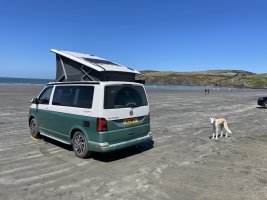
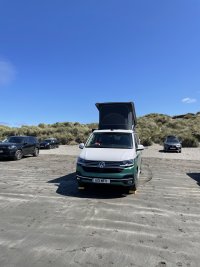

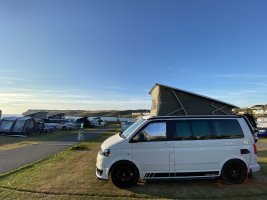

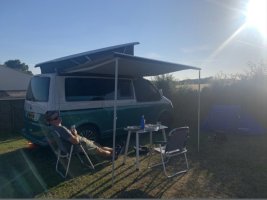

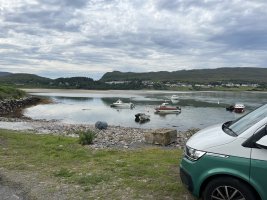
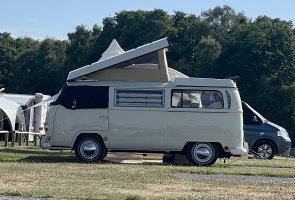
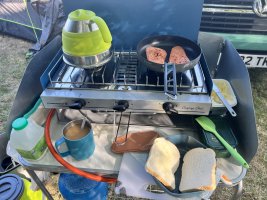
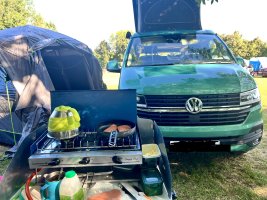
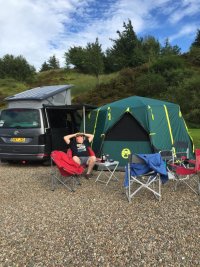
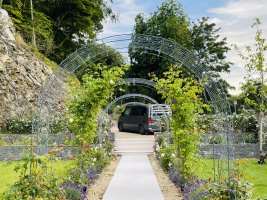
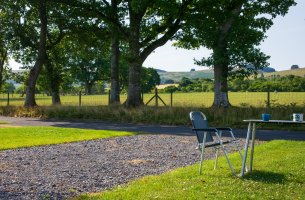
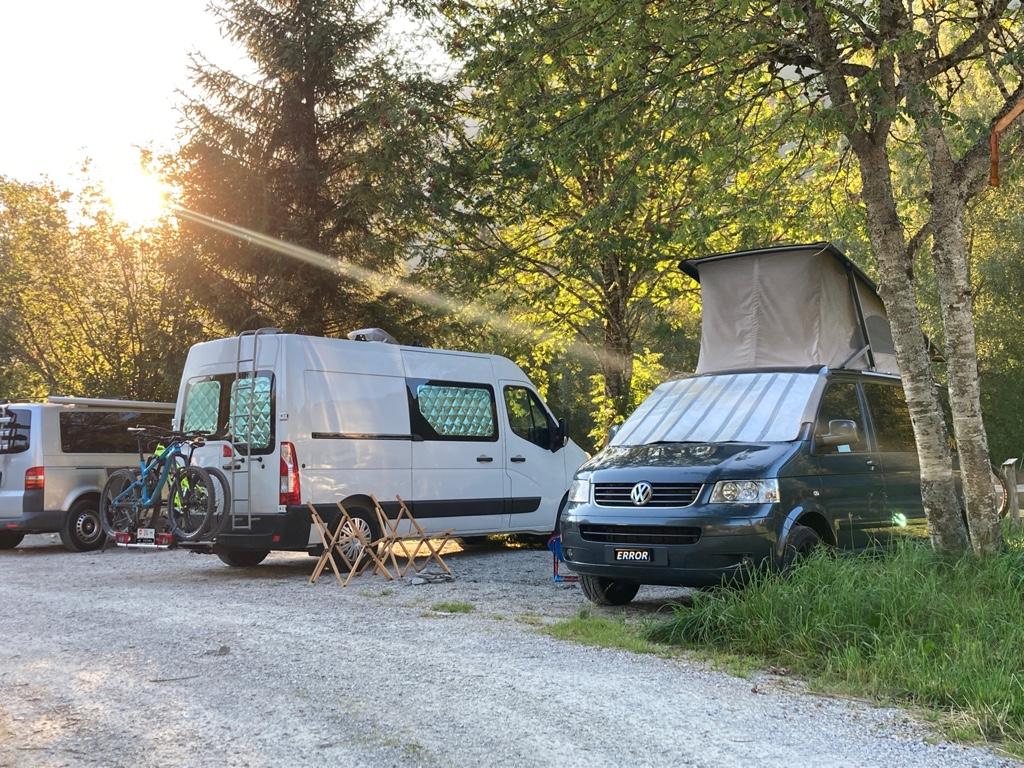
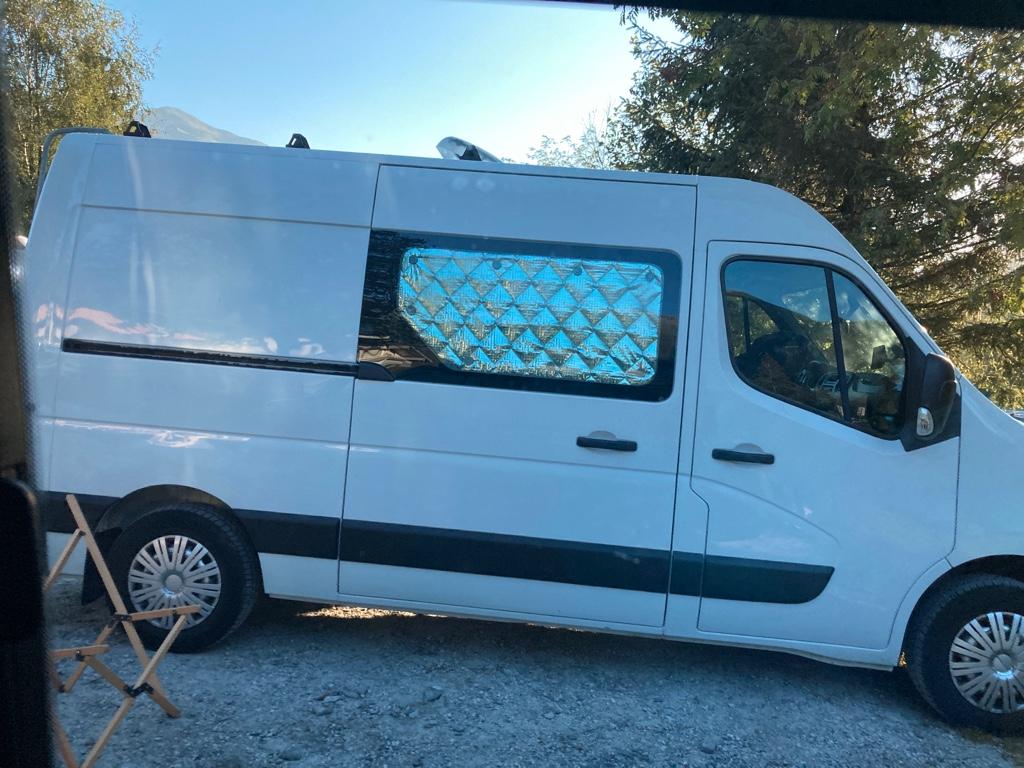
 Drove down to the New Forest after work to get used to how everything works and test out our set-up and new gear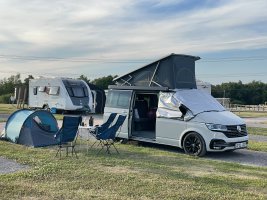












 .
.