The off-road corner

Good idea. Count me in.
The only problem I see is that there is some legal work to be done and it may differ depending on the country.

VB is a Dutch company, cheapest prices should be in Holland.

What service does it require? Can a local VW dealer do this?
 
I need no homologation in UK, so can do anywhere. I guess the VB service (which service?) could be done by any authorized VB dealer
 
Since we have had a lot of questions again recently on some of the off-road mods to our Cali, and realising that the forum topics on them are somewhat scattered across this forum, I will try to 'consolidate' them here, FYI. Photo's and videos are in the various topics.

Over the years, we have done the following mods:
And then we have done two off-road driving courses with our Cali:
 
Last edited:
Since we have had a lot of questions again recently on some of the off-road mods to our Cali, and realising that the forum topics on them are somewhat scattered across this forum, I will try to 'consolidate' them here, FYI. Photo's and videos are in the various topics.

Over the years, we have done the following mods:
  • VB air-suspension, with an 'off-road' raised (+3 cm) modus. (A.o. this topic on this forum)
  • raised drive train vents (Seikel kit, this topic on this forum)
  • raised air intake (Relleum kit, this topic on this forum); alternative: Terranger kit
  • aluminum underside protection (Seikel kit, this topic on this forum)
  • reinforced towing eyes in front (Relleum kit, see here)
  • Michelin Latitude Cross AT tyres (this topic on this forum)
  • conversion of our bike rack to carry an additional spare wheel (Terranger kit, this topic on this forum)
  • a 12V air compressor, because we regularly need to deflate or inflate the tyres, depending on the terrain.
  • an additional hydraulic jack. With the raised suspension (either fixed, such as Seikel's, or the VB air in service mode) and slightly larger AT tyres, the standard jack can't raise the Cali high enough to change a tyre... We bought a separate hydraulic jack, small enough to go under the Cali, but with enough raising height.

And then we have done two off-road driving courses with our Cali:


Brilliant summary, thank you
 
Hope you don't mind kicking back some life in this topic! We're booked on the Iceland ferry for end of the summer (August/September) and I'm looking into preparing our Cali T6.1 4motion with diff lock. Had skid plates for the engine and the differential mounted at purchase, the rest is standard.

I'm not a serious off-roader and probably not going to be one so I don't really want to invest a lot of money for stuff I don't really need, besides this Iceland trip I don't foresee any other serious off-road trips. So what's the minimum I should change to be able to do drive some of the F-roads without problems. I've been looking at this list of F-roads and plan only to take roads that are relatively easy and don't have river crossings (great website!). For other places we're looking into taking a bus and do some hikes that way.

So I'm guessing I'll probably need all terrain tyres and that's it?
 
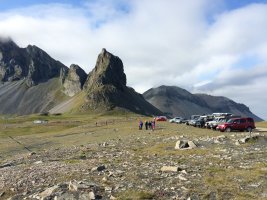
We took our Toyota Hilux on a 3 week trip to Iceland 10yrs ago.
It was a fantastic experience, and we crossed the central highlands many times on F-roads. They were all pretty much easy to drive gravel tracks. Some minor washouts a couple times, but kept in good repair.
Skid plates will help for stones flicked up by wheels. We had AT tyres, they are important not just for traction, but also robustness, since AT tyres generally thicker and stronger sidewalls etc
Take care of fuel range in the highlands. Not an issue if you fill up before a long crossing and there are warning signs for distance to next fuel station.
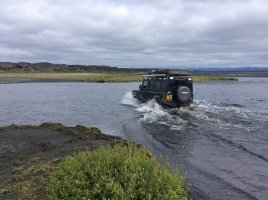
We have a raised air intake/snorkel on the Hilux. There was one river where it would have been essential, but after our guide and 2 other vehciles with snorkels crossed it, the guide decided it was too deep for the Landrover discovery in our group which didn’t have a snorkel, so they turned back,
Some deeper crossings had an easier route for cars with no raised air intake.
The river crossings are probably the biggest challenge. So avoid if concerned.

Enjoy the trip, it is amazing place to visit
 
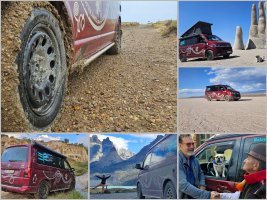
Just finished a year and 33,000km just in South America. #1 item I would add is the Seikel rock sliders - they are amazing protection, both on and off road. These vans don't have a lot of clearance, and the entry/departure angles are not great. Be sure to approach big dips at an angle

Banging the side of any vehicle into hard obstacles is not uncommon, and my sliders have some serious marks from off road and city driving.


My mechanic installed then for a fraction of the price.

We have steel rims and 225/65r17 all terrain tires which I deflate whenever we get on rough roads and/or corrugation. Deflate 30% if average conditions, 50% for really bad/bouncy/banging, and even lower for sand.

We carry 2x battery powered air pumps which can reinflate each of the 4 tires 1bar/15psi each, which is plenty until we get to a gas station (even remote Patagonia).

PRO TIP: Don't engage the diff lock when going "to" a place, but save it to "get out". If you get stuck while diff is engaged and tires are deflated, you don't have many other ways to get yourself unstuck.

GridArt_20250316_172449016.jpg
 
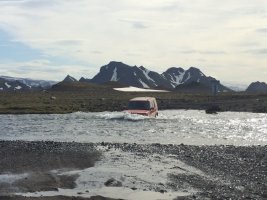
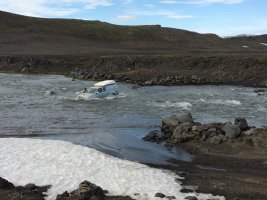
Awesome! Although I wouldn't dare to go down the river passage in the last picture in my precious Cali :D
 
Just finished a year and 33,000km just in South America. #1 item I would add is the Seikel rock sliders - they are amazing protection, both on and off road. These vans don't have a lot of clearance, and the entry/departure angles are not great. Be sure to approach big dips at an angle

Banging the side of any vehicle into hard obstacles is not uncommon, and my sliders have some serious marks from off road and city driving.


My mechanic installed then for a fraction of the price.

We have steel rims and 225/65r17 all terrain tires which I deflate whenever we get on rough roads and/or corrugation. Deflate 30% if average conditions, 50% for really bad/bouncy/banging, and even lower for sand.

We carry 2x battery powered air pumps which can reinflate each of the 4 tires 1bar/15psi each, which is plenty until we get to a gas station (even remote Patagonia).

PRO TIP: Don't engage the diff lock when going "to" a place, but save it to "get out". If you get stuck while diff is engaged and tires are deflated, you don't have many other ways to get yourself unstuck.

View attachment 134547

Excellent advice, especially on using the diff lock. My rock sliders have saved my sills on a number of occasions too. I would always carry recovery boards as well. I opted for 4 of the Maxtrax lite as same weight as two standard and much more effective if you can get one under each wheel. Not only great for traction in sand or mud but also for bridging larger rocks when there is no way around. They double up as levellers in a pinch too.
 
Hope you don't mind kicking back some life in this topic! We're booked on the Iceland ferry for end of the summer (August/September) and I'm looking into preparing our Cali T6.1 4motion with diff lock. Had skid plates for the engine and the differential mounted at purchase, the rest is standard.

I'm not a serious off-roader and probably not going to be one so I don't really want to invest a lot of money for stuff I don't really need, besides this Iceland trip I don't foresee any other serious off-road trips. So what's the minimum I should change to be able to do drive some of the F-roads without problems. I've been looking at this list of F-roads and plan only to take roads that are relatively easy and don't have river crossings (great website!). For other places we're looking into taking a bus and do some hikes that way.

So I'm guessing I'll probably need all terrain tyres and that's it?
Some really good advice on here. A good/reliable tyre inflator and repair kit should be on your list as a minimum in addition to AT tyres. Be prepared for very strong winds at any time of year - it can make or break your camps and hikes!

What a great adventure - enjoy!
 
I hope everyone had a good time last year in Iceland.
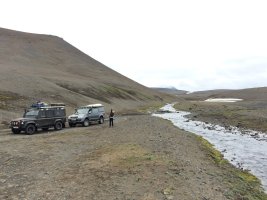
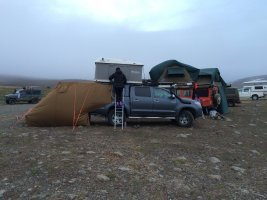
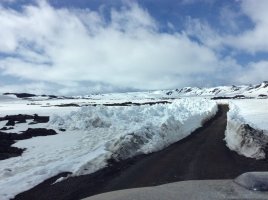
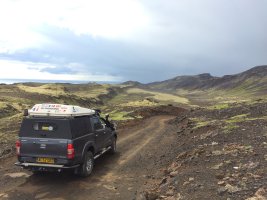
We were there for just over two months and had a fabulous time on the f roads.
We already had VB suspension on the van from new and fitted the Seikel diff and gearbox kits done by Volkstrek (who are the UK Seikel agent) in Aberystwyth.
Tyres were Falken Euro Allroad on standard 17in alloys and they performed well on and offroad.
Underbody protection was from Direct 4x4 in Derby. Engine/gearbox, rear diff, exhaust and diesel tank (essential imo as you are a very long way from help on the f roads if you have no fuel) all for £900 fitted. Far cheaper than the Seikel stuff. All made from heavy duty 6mm alloy plate.
Air intake. I removed the standard setup and used a Forge Motorsport foam filter setup in housing which replaces the top part of the standard airbox. The normal inlet was blocked off. This worked well and raised the air intake a lot. No problems with any water ingress but the foam filter had to be taken off regularly and cleaned due the Iceland gravel road dust clouds.
We are going back again next year in August and September, late than last year as all the f roads should be open in August. and September will give a chance a seeing the Aurora as well before the f roads close.
I will be fitting (temporarily) a Bravo snorkel as we plan on bigger river crossings and it means we can retain the standard air filter.
Tyres will be Falken AT3 on steel wheels this time which are more suited to rough roads and I will be building a frame on the passenger side of the van for larger tracks and a fuel can.

20250315_105951.jpg

20250315_110012.jpg

20250315_110054.jpg

20250315_110145.jpg

20250422_112547 - Copy.jpg

20250422_124827.jpg

20250422_124854.jpg
 
I hope everyone had a good time last year in Iceland.
We were there for just over two months and had a fabulous time on the f roads.
We already had VB suspension on the van from new and fitted the Seikel diff and gearbox kits done by Volkstrek (who are the UK Seikel agent) in Aberystwyth.
Tyres were Falken Euro Allroad on standard 17in alloys and they performed well on and offroad.
Underbody protection was from Direct 4x4 in Derby. Engine/gearbox, rear diff, exhaust and diesel tank (essential imo as you are a very long way from help on the f roads if you have no fuel) all for £900 fitted. Far cheaper than the Seikel stuff. All made from heavy duty 6mm alloy plate.
Air intake. I removed the standard setup and used a Forge Motorsport foam filter setup in housing which replaces the top part of the standard airbox. The normal inlet was blocked off. This worked well and raised the air intake a lot. No problems with any water ingress but the foam filter had to be taken off regularly and cleaned due the Iceland gravel road dust clouds.
We are going back again next year in August and September, late than last year as all the f roads should be open in August. and September will give a chance a seeing the Aurora as well before the f roads close.
I will be fitting (temporarily) a Bravo snorkel as we plan on bigger river crossings and it means we can retain the standard air filter.
Tyres will be Falken AT3 on steel wheels this time which are more suited to rough roads and I will be building a frame on the passenger side of the van for larger tracks and a fuel can.

View attachment 150134

View attachment 150135

View attachment 150136

View attachment 150137

View attachment 150138

View attachment 150139

View attachment 150140
I have a similar set up to yours but not running air suspension. I have a left with Bilstein shocks and springs. Can I ask what is the maximum lift you have on the VB and how it performed on the F roads?

Thanks
 
I have a similar set up to yours but not running air suspension. I have a left with Bilstein shocks and springs. Can I ask what is the maximum lift you have on the VB and how it performed on the F roads?

Thanks
My friend had Bilstein in South America and they ended up being too stiff on corrugation and general bad roads, so he preferred to avoid those roads. He had full Seikel under protection

We went with stock shocks so we could still fit in 2m parking, and the spare 225/65r17 tire underneath.

PRO TIP: If spare underneath, be sure the valve is hidden behind the support bracket - ours wasn't and it got a minor cut on the valve stem.
 
My friend had Bilstein in South America and they ended up being too stiff on corrugation and general bad roads, so he preferred to avoid those roads. He had full Seikel under protection

We went with stock shocks so we could still fit in 2m parking, and the spare 225/65r17 tire underneath.

PRO TIP: If spare underneath, be sure the valve is hidden behind the support bracket - ours wasn't and it got a minor cut on the valve stem.
Thanks for the tip and insight. I assume you haven’t had an issue with the stock ride height then? I’ve managed to get a partly inflated 255/65/17 tyre underneath without any modification to the bracket, I’m now going to check the alignment of the valve!
 
Thanks for the tip and insight. I assume you haven’t had an issue with the stock ride height then? I’ve managed to get a partly inflated 255/65/17 tyre underneath without any modification to the bracket, I’m now going to check the alignment of the valve!
No issues, and I don't shy away from rugged terrain
Thanks for the tip and insight. I assume you haven’t had an issue with the stock ride height then? I’ve managed to get a partly inflated 255/65/17 tyre underneath without any modification to the bracket, I’m now going to check the alignment of the valve!
No height problems, and I don't shy away from rugged terrain
 
I have a similar set up to yours but not running air suspension. I have a left with Bilstein shocks and springs. Can I ask what is the maximum lift you have on the VB and how it performed on the F roads?

Thanks
The Offroad setting gives plus 30mm over standard. It will go higher but VW do not recommend driving in this mode as the drive shaft angles become very big. We never had cause to use this last year. I think the max water depth we had was the final crossing at Landmanalauger where the depth was pretty much to the top of the wheels. We mainly kept it in Standard ride height on the F roads except for river crossings and the occasions where you are literally driving over bedrock with big variations in height or you see a big rock or rut in the road.
One thing to be aware of is that you are limited to a max of 20mph in Offroad. This isn't normally a problem but we found it a bit frustrating at times, like on the southern F208 to Landmanalauger where there are many river crossings, waiting for the van to lift up ( there is no air tank on the VB setup so you have to wait for the compressor to kick in and lift it up.) Then you lower again after the crossing so that you can go faster than 20mph. Not really a big deal unless you are really pushed for time and it does give you time to assess the crossing before diving in. Again this is a VW limitation to do with the driveshaft angles.
Comfort wise I think it is an improvement over standard springs and Sport mode (which I generally drive in on normal roads stiffens the suspension up nicely without making it a harsh ride.
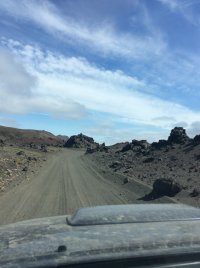
The main problem we had in Iceland was the corrugations in the gravel roads. Virtually all the gravel roads (and not just the f roads) have these corrugations going across the them. We found that sometimes speeding up actually reduces the effect. We had a rattle from the awning which I couldn't fix which drove us mad at times.
And of course there is the self levelling.
Video of the F208 to Landmanalauger
Road to Dreki
 
Last edited:
( there is no air tank on the VB setup so you have to wait for the compressor to kick in and lift it up.)
You can order the system with air tank, if you want it!
The main problem we had in Iceland was the corrugations in the gravel roads. Virtually all the gravel roads (and not just the f roads) have these corrugations going across the them. We found that sometimes speeding up actually reduces the effect.
We found that above about 70 km/h we sort of 'flew' over them... :Stig (with 10% deflated 225/70/R16).

 
You can order the system with air tank, if you want it!

We found that above about 70 km/h we sort of 'flew' over them... :Stig (with 10% deflated 225/70/R16).
Is the air tank a recent thing? It wasn't offered to us eleven years ago when we had ours fitted.
Yes, weird isn't it. The inclination is to slow down. Just a matter of finding the right speed/frequency.
We didn't play with the tyre pressures at all so next year I will try lowering.
 
Is the air tank a recent thing? It wasn't offered to us eleven years ago when we had ours fitted.
It was an (expensive!) option when we had ours fitted in 2013. We didn't take it. Today it is a standard part.
Yes, weird isn't it. The inclination is to slow down. Just a matter of finding the right speed/frequency.
It is a frequency thing. It seems that above a certain speed, the frequency gets above your vehicle's own frequency, and the car stops resonating that heavily. Find out your threshold speed; it tends to be higher than your intuition tells you at first... :Nailbiting
We didn't play with the tyre pressures at all so next year I will try lowering.
We deflate and inflate a lot, from -10% on gravel to as much as -50% on sand sometimes. Here is an interesting table from the Seikel off-road training documentation:

Scherm­afbeelding 2026-08-03 om 12.09.25.png
 
You can order the system with air tank, if you want it!

We found that above about 70 km/h we sort of 'flew' over them... :Stig (with 10% deflated 225/70/R16).

I always reduce air by at least 30% for off-road, and 50% for corrugation or technical, even when driving 80kph (corrugation) across both Africa and South America. The reduced "banging" helps both the vehicle and the occupants.

I don't mean the one-day gravel road courses offered here in Europe.
 

Similar threads

Back
Top